
For centuries, the “social lubricant” of choice has been ethanol. From the taverns of old Europe to the modern cocktail bars of Manhattan, alcohol has been the undisputed pillar of adult connection. But a quiet revolution is taking place. A new generation of “Sober Curious” professionals is redefining what it means to have a “drink.”
This movement isn’t necessarily about total abstinence or recovery; it is about Metabolic Health, cognitive longevity, and the refusal to trade tomorrow’s clarity for tonight’s buzz. The rise of alcohol-free botanical spirits represents a cultural “upgrade”—a way to maintain the sophisticated ritual of a cocktail without the neurotoxic and metabolic toll of alcohol.
The Science of Distillation Without Ethanol
One of the most common misconceptions about alcohol-free spirits is that they are simply “expensive flavored water.” In reality, the production of a high-quality botanical spirit is a feat of chemical engineering.
Traditional spirits use Ethanol as a solvent to extract flavors from plants. Alcohol-free producers, however, must find alternative ways to capture the Terpenes (aromatic compounds) and essential oils of their ingredients.
- Steam Distillation: This involves passing steam through botanicals like juniper, peppercorns, and citrus peels. Each botanical is often distilled at a specific temperature to capture its “soul” without burning the delicate oils.
- Maceration: Some producers soak botanicals in water or small amounts of glycerin to extract deep, earthy notes from roots and barks like gentian or cinchona.
- The Result: A complex liquid that mimics the “bite” and mouthfeel of alcohol through the use of capsicum (chili) or ginger, while delivering a sophisticated flavor profile that evolves on the palate.
The Health Perspective: Why Your Body Thanks You
The decision to swap a traditional gin for a botanical alternative has immediate physiological benefits that extend far beyond avoiding a hangover.
1. Metabolic Health and Fat Oxidation
Alcohol is a metabolic priority. When you consume ethanol, your liver stops everything else—including fat oxidation—to clear the toxin. A single drink can suppress fat burning by as much as 73% for several hours. Botanical spirits, which are usually calorie-free or very low in sugar, allow your metabolism to remain in a state of Metabolic Flexibility.
2. The Gut-Brain Axis
Ethanol is a known irritant to the gut lining and can disrupt the delicate balance of the Microbiome. Conversely, many botanical spirits utilize ingredients that have been used as “digestive bitters” for centuries. Ingredients like dandelion root, burdock, and orange peel can actually support digestion by stimulating the production of enzymes.
3. Sleep Architecture
While alcohol is a sedative that helps you fall asleep faster, it is a thief of REM sleep. Even one drink can cause “fragmented sleep,” leading to the grogginess and irritability often felt the next day. Botanical spirits have zero impact on sleep architecture, ensuring you wake up with total Cognitive Clarity.
Categories of Botanical Spirits
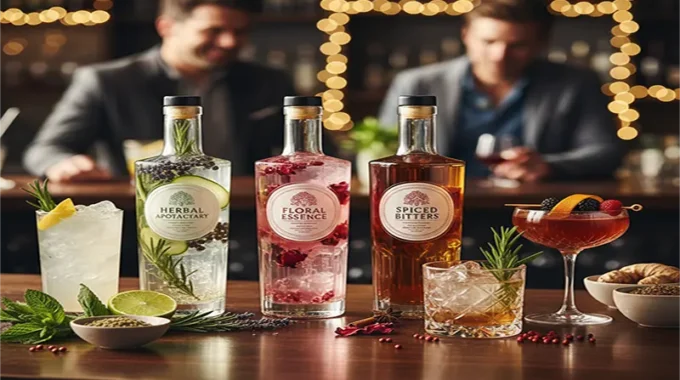
As the market matures, alcohol-free “liquors” have organized into three distinct categories:
The ‘Gordian’ Alternatives (Gin & Tequila Profiles)
These are designed to replace the primary spirit in a classic drink. They rely heavily on juniper (for gin) or agave and smoke (for tequila). They provide the familiar botanical “kick” needed to cut through the bitterness of a tonic.
The Bitters & Aperitifs
Modeled after Italian classics like Campari or Aperol, these spirits are heavy on barks and roots. They are often the most “health-forward” because they utilize bitter compounds that stimulate the Vagus Nerve and aid in glucose metabolism.
Functional Spirits (The Bliss Molecules)
This is the “cutting edge” of the industry. Brands are now infusing their spirits with adaptogens and nootropics to mimic the relaxing effect of alcohol.
- L-Theanine & Ashwagandha: To promote a “zen-like” social calm.
- 5-HTP: To support serotonin production.
- GABA-modulators: Using botanicals like Valerian or Passionflower to gently relax the nervous system without the loss of motor control.
Standard Gin vs. Botanical Spirit Comparison
| Feature | Standard London Dry Gin | Premium Botanical Spirit |
| Calories (per 2oz) | 130 – 150 kcal | 0 – 10 kcal |
| Alcohol (ABV) | 37% – 47% | 0.0% – 0.5% |
| Sugar Content | 0g (but alcohol converts to sugar) | 0g |
| Impact on REM Sleep | Highly Disruptive | Neutral / Supportive |
| Impact on Liver | High Metabolic Load | Zero Load |
The Art of the ‘Functional Pour’: 3 Signature Recipes
Avoid the “Mocktail Trap” of sugar-laden juices. Instead, focus on clean, botanical-forward serves.
1. The Zero-Proof ‘Botanical & Tonic’
- 2 oz Juniper-forward botanical spirit
- 4 oz Premium sugar-free tonic
- Garnish: A sprig of rosemary and a grapefruit twist.
- Benefit: Rosemary contains cineole, which has been shown to support memory and focus.
2. The Digestive Aperitif
- 2 oz Bitter botanical spirit (Gentian/Artemisia base)
- Top with sparkling mineral water
- Garnish: A large orange wedge.
- Benefit: The bitters prepare the stomach for a meal, preventing post-dinner bloating.
3. The ‘Functional Fizz’ (Evening Relaxant)
- 2 oz Adaptogen-infused spirit (L-Theanine/Ashwagandha)
- 1 oz Fresh lime juice
- Top with ginger kombucha
- Benefit: Combines the cortisol-lowering power of adaptogens with the probiotic benefits of kombucha.
The Future of the ‘Third Space’
For decades, the “Third Space”—the place where we socialize outside of home and work—has been centered around the bar. As the health data on alcohol becomes more conclusive, these spaces are evolving. We are seeing the rise of “Dry Bars” and “Alcohol-Free Social Clubs” that focus on the craft of the drink and the quality of the conversation rather than the intoxication of the guest.
Choosing an alcohol-free botanical spirit is an act of Neuroplasticity—it is training your brain that “relaxation” and “socializing” are not dependent on a chemical depressant. It allows for more authentic connections, better memories, and a body that stays in a state of peak performance.
Clarity as a Status Symbol
In an era of high-stress environments and constant demands on our cognitive bandwidth, clarity has become the ultimate status symbol. Being the person who can enjoy a sophisticated “Negroni” on a Tuesday night and hit a personal record in the gym at 6:00 AM on Wednesday is a powerful competitive advantage.
Alcohol-free botanical spirits offer the best of both worlds: the beauty of the ritual and the integrity of the body. The next time you find yourself at a social gathering, consider reaching for the botanicals. Your liver, your brain, and your future self will thank you.